


From Technical Signals to System Reform: Interpreting the Direction of Water and Sanitation Practice
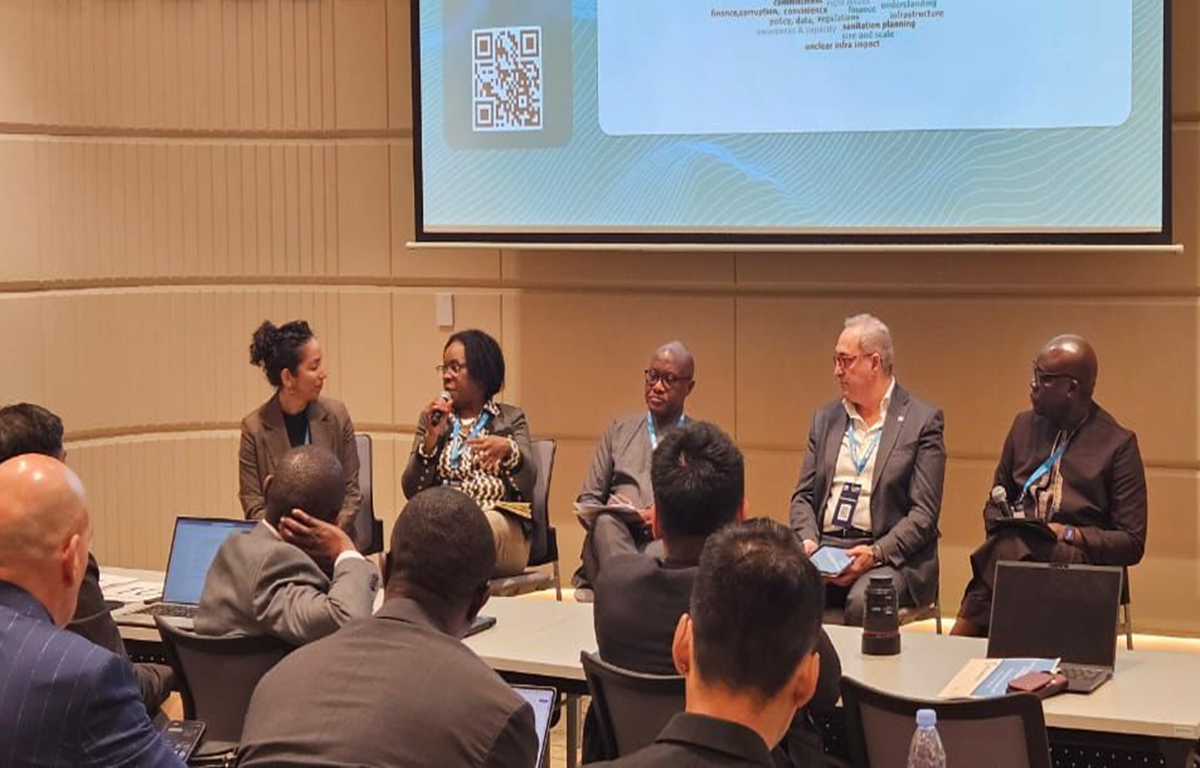
The technical and plenary sessions at the recent IWA Water and Development Congress & Exhibition 2025, held in Bangkok revealed more than incremental progress across thematic tracks.
Taken together, they signalled a structural shift in how the water and sanitation sector is beginning to define its own problems. The Congress did not present a single unifying solution. Instead, it exposed a convergence of technical concerns that point toward the same conclusion: current delivery models are misaligned with the realities of climate stress, urban growth, and institutional capacity.
Across sessions on safe drinking water, sanitation and wastewater, smart water management, and governance and financing, a consistent pattern emerged. Engineering excellence alone is no longer sufficient. The sector is being pushed to confront how technical systems behave under real world constraints, fragmented institutions, and volatile environmental conditions.
This thought-piece reflects Proficient Projects and Advisory’s interpretation of those technical signals. It translates the Congress discourse into system-level insights relevant to policymakers, utilities, regulators, and financiers seeking implementable pathways rather than theoretical optimisation.
Safe Drinking Water: Congress Insights on the Limits of Treatment-Centric Models
A defining technical thread across Congress discussions on safe drinking water was the growing gap between treatment capability and source water degradation. Presentations and exchanges repeatedly highlighted rising nitrate concentrations, emerging chemical contaminants, microbial risks, and climate-driven variability in raw water quality. These pressures are no longer episodic. They are becoming structural features of water supply systems.
The technical response historically has been to extend treatment chains. More advanced filtration, additional chemical dosing, and energy-intensive processes were presented as necessary upgrades. Yet Congress discussions made clear that this pathway is encountering diminishing returns. Treatment upgrades increase operational complexity, energy demand, and cost exposure while leaving utilities vulnerable to further upstream degradation.
A critical technical insight reinforced during the Congress was that safe drinking water outcomes are increasingly determined outside the treatment plant. Poorly managed sanitation, diffuse urban pollution, and weak land use controls were consistently identified as dominant drivers of source water deterioration. In this context, sanitation performance and wastewater containment function as de facto source-protection infrastructure.
The implication emerging from the Congress is profound. Ensuring safe drinking water can no longer be treated as a downstream engineering challenge. It must be approached as a system outcome shaped by upstream sanitation, regulation, and governance. Utilities that remain excluded from these upstream conversations are being asked to absorb risks they cannot sustainably manage.
Sanitation and Wastewater: Congress Evidence for a Shift Toward Service-Oriented Systems
Technical sessions on sanitation and wastewater at the Congress reflected a clear departure from disposal-focused paradigms. Across multiple discussions, sanitation was reframed as a public service system with direct implications for water quality, public health, climate resilience, and economic productivity.
Congress contributions showcased significant advances in low-energy treatment processes, decentralised and hybrid systems, and resource recovery pathways. Nutrient reuse, water reclamation, and energy recovery were no longer presented as experimental concepts but as viable components of urban sanitation strategies.
However, the Congress also surfaced a persistent implementation gap. Many technically sound systems underperform or fail once external support diminishes. Discussions consistently traced this failure not to technology choice, but to institutional fragmentation, weak operational financing, and limited life-cycle planning.
A recurring technical theme was the importance of evaluating sanitation investments over their full operational lifespan. Congress exchanges emphasised that performance must be measured not only by treatment efficiency, but by energy consumption, maintenance demands, emissions, logistics, and affordability. Systems that appear optimal at commissioning often impose long-term burdens that undermine sustainability.
The Congress therefore reinforced the need to treat sanitation as a continuous service with predictable financing, professionalised operations, and regulatory oversight. Without this shift, even the most innovative technologies will remain trapped in pilot cycles.
Smart Water Management: Congress Perspectives on Digitalisation as a Governance Tool
Digital innovation featured prominently across Congress sessions on smart water management. Real-time monitoring, data integration platforms, artificial intelligence, and predictive analytics were presented as essential tools for managing complexity under climate uncertainty.
Yet the Congress discourse was notably pragmatic. Speakers and practitioners repeatedly cautioned against viewing digital tools as solutions in isolation. The strongest technical consensus was that digital systems only create value when embedded within clear decision-making structures and institutional accountability.
Congress case discussions demonstrated that effective smart water management begins with purposeful data design. Data collection must be directly linked to operational control, regulatory compliance, risk management, and investment prioritisation. Where data exists without ownership or application, digital platforms add cost rather than resilience.
Artificial intelligence was positioned as an enabler of scenario analysis rather than automation for its own sake. Congress discussions highlighted its potential to help utilities anticipate shocks, test trade-offs, and optimise performance under uncertainty. However, these benefits depend on governance frameworks that ensure transparency, institutional learning, and control over data assets.
The technical signal from the Congress is that smart water management is fundamentally a governance instrument. Its success is determined less by technological sophistication and more by how it reshapes decision-making, accountability, and service delivery.
Governance and Financing: Congress Recognition of the Structural Constraints on Technical Performance
Although often discussed as enabling factors, governance and financing emerged during the Congress as binding constraints on technical success. Across sessions, fragmented institutional mandates were repeatedly identified as a primary reason systems underperform, even where infrastructure investment is substantial.
Congress discussions revealed a growing alignment among development finance institutions around service-oriented and climate-resilient approaches, particularly in sanitation. Financing is gradually shifting away from isolated asset delivery toward institutional strengthening, data systems, and long-term service outcomes.
However, the Congress also underscored the risks of partial reform. Climate finance and innovation funding can exacerbate fragmentation when applied through disconnected projects. Without regulatory clarity, coordinated planning, and performance accountability, new funding streams risk reinforcing existing inefficiencies.
A central insight emerging from the Congress is that governance and financing must be treated as technical design parameters. They shape system behaviour as directly as pipes, plants, and digital platforms. Ignoring this reality results in technically sound systems that fail in practice.
Integration Under Climate Stress: Congress Lessons on System Resilience
Climate stress was not treated as a future risk during the Congress. It was discussed as a present condition shaping daily operational realities. Variability in water availability, increased pollution loading during extreme events, and energy supply instability were recurrent themes across technical sessions.
Congress discussions emphasised that resilience cannot be achieved through infrastructure hardening alone. Instead, it emerges from integration across water supply, sanitation, wastewater, energy, health, and urban planning. Systems-thinking approaches that surface trade-offs early were repeatedly highlighted as critical tools for decision-makers.
Importantly, the Congress reinforced that some of the highest-impact resilience measures are operational rather than structural. Energy efficiency, logistics coordination, regulatory enforcement, and demand management consistently delivered greater returns than visible capital investments.
The technical message is clear. Resilience is an outcome of how systems are governed and operated, not simply what is built.
Conclusion: Translating Congress Signals into Implementable Direction
The Congress did not offer a single roadmap for the water and sanitation sector. What it provided was more valuable: a coherent set of technical signals pointing toward necessary system reform. Across themes, the message was consistent. Fragmented, asset-centric approaches are incompatible with climate stress and urban complexity.
For Proficient Projects and Advisory, these insights reinforce a strategic imperative. Advisory support must bridge technical knowledge and implementation reality. It must help institutions navigate trade-offs, align governance with system behaviour, and design services that remain functional under pressure.
The future of water and sanitation will be shaped by those who can interpret complexity, integrate systems, and act decisively. The Congress made clear that the sector is ready for this shift. The challenge now lies in execution.